
Understanding Lymphedema in Lipedema
The term “lipo-lymphedema” literally means fat and swelling and has been used to describe the most advanced stage of lipedema. However, this label is misleading because we now know that lymphedema can be seen at any stage of lipedema, even stage 1. Rather than relying on this term, it is more accurate to have two diagnoses: lipedema and lymphedema.
If you have lipedema and are experiencing swelling, contact your doctor and describe your symptoms. The additional diagnosis of lymphedema creates more clarity in your medical record and can qualify you for more treatment and equipment. Most importantly, it can prevent swelling progression, reduce risks of increased fibrosis, and ultimately improve your quality of life.
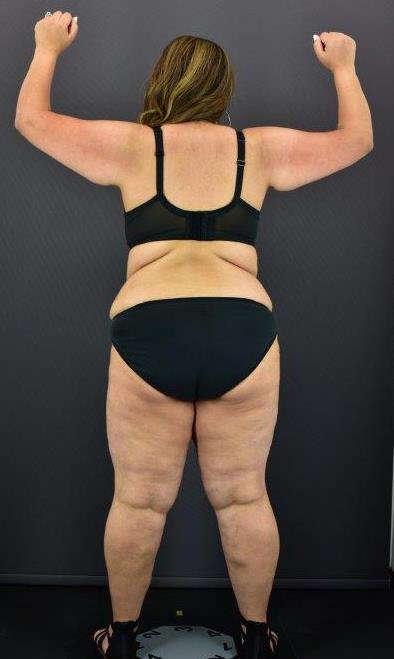
Image credit: © 2025 Karen Ashforth, used with permission
Lymphedema is characterized by chronic swelling (edema) caused by impaired lymph flow. Primary lymphedema occurs because of genetic lymph system abnormalities and swelling can appear at any age. Secondary lymphedema results from damage and/or overload to the lymph system. Common causes of secondary lymphedema are cancer treatment, venous disease, obesity, and surgery or trauma that damages the lymphatic system.
Another source of confusion is that some treatments are used to treat both lipedema and lymphedema, but they actually have different functions. Specialized massage (manual lymphatic drainage) and pneumatic compression pumps are beneficial for lipedema because they decrease pain and capillary fragility. Compression garments support lipedema tissues and compensate for decreased skin elasticity. In lymphedema, all three are used to treat and manage swelling.
Lipedema and lymphedema are both inflammatory conditions. Lipedema is a condition of inflamed and abnormal fat tissue. Lymphedema inflammation is created by congested fluid that over time turns into a hard fatty fibrotic tissue. It is interesting that these two conditions may be related because the biomarker platelet factor 4 is elevated in both. Reference: Ma, W., Gil, H. J., Escobedo, N., et al. (2020). Platelet factor 4 is a biomarker for lymphatic-promoted disorders. JCI insight, 5(13), e135109.
Could I have both Lipedema and Lymphedema?
In the early stages of lymphedema, it is possible to have pitting, or indent marks on the skin seen after removing compression garments. Pitting is tested by pressing a finger into the skin and holding for 30-60 seconds. Pitting signals lymph fluid has been trapped. Lipedema tissue does not pit, but it can if lymphedema is present. Over time trapped lymph turns into lymphostatic fibrosis, a hard fatty matrix which no longer pits. If this is the case, other tests must be used.

Another test for lymphedema is the Stemmer’s sign. This is positive if it is not possible to lift the skin from the top of the second finger or toe.
Unlike lipedema, lymphedema can be reduced by massage, exercise, vibration, hydrostatic water pressure, elevation, compression garments and pumps. A tape measure used before and after treatment can show changes in swelling. A significant reduction is at least 1-2 cm.
Another clue: lymphedema can feel heavy and can increase pain because it is essentially extra fluid filling up the spaces between the cells. If you feel lighter and have less pain after decongestive activity, it might be because of lymphedema.
Lymphedema can be aggravated by common co-morbid conditions: mast cell activation syndrome, postural orthostatic tachycardia syndrome, low thyroid, and Ehler’s Danlos syndrome.
There are many risk factors that can make swelling worse. One of the biggest is lack of movement, because the lymph system relies on muscles to move lymph fluid. Hot or cold temperatures can impact swelling. Dietary triggers for swelling include food sensitivities, salt, sugar, gluten, highly processed foods, and alcohol. Digestive disorders can impact swelling such as Crohn’s disease, small intestinal bacterial overgrowth (SIBO), and “leaky gut.” Travel can cause increased swelling because it is often sedentary, and air cabin pressure is lower than normal. Seeking treatment for swelling is important because it lowers risk factors and helps prevent progression.
About the author: Karen Ashforth has practiced for over 40 years as an occupational therapist and specialized in lipedema and lymphedema treatment for over 20 years. She treats patients both in person and virtually, and performs research that she presents at national and international conferences. Karen’s passions are pioneering treatments for lymphedema and lipedema fibrosis.
© 2025 Karen Ashforth, MS, OTR, CLT-LANA
Courtesy of Lighthouse Lymphedema Network www.LighthouseLymphedema.org